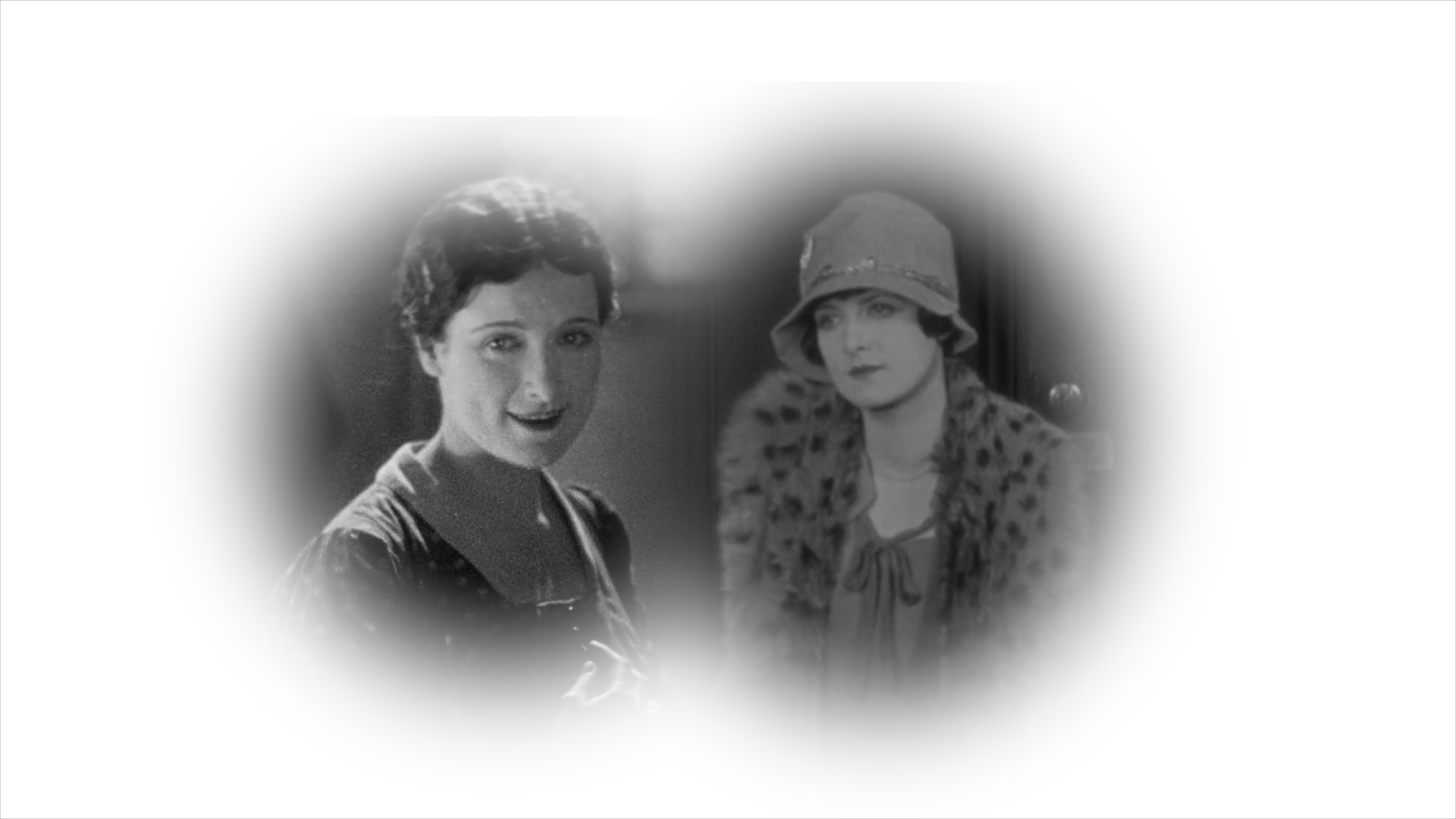
Blonde-haired women hold a perpetual fascination for Alfred Hitchcock, even in his early work. In his first thriller, The Lodger, blonde hair was a target for violence, and in his next film, Downhill, golden locks perched atop the head of a conniving temptress. However, his first lead actress with dark hair was able to delicately dance between alienating audiences and getting exactly what her characters wanted. She managed to juggle two prizefighters and keep a wealthy farmer from slipping away all while remaining Hitchcock’s object of affection.
Just a heads-up that this spotlight has a very tragic ending. If you’d rather not listen to the details, feel free to duck out now. Otherwise, let’s continue. Lillian Hall-Davis starred in two Hitchcock films. In the first and my personal favorite of her Hitchcock performances, 1927’s The Ring, she plays a carnival ticket-taker who has to decide between two pugilists who are both infatuated with her.
In her first shot, she’s literally an object of affection. The de facto villain of the piece played by Ian Hunter spots her ticket taker in a sea of other people and Hitchcock superimposes her face across the crowd and it grows larger and larger until it fills the screen. Make no mistake, Hitchcock appears to be saying, this woman is going to be the center of this story.
Carl Brisson’s boxer is the protagonist but the plot revolves around Hall-Davis. Her character ultimately has to make a decision about which man to choose and has a lot of difficulty making up her mind. And while that may seem like an unlikeable character, she manages to stay on the audience’s good side by never losing a sense of winsomeness and effervescence that makes the character appealing. This is seen in the way she’s easily able to coax people into a boxing tent or the way she enjoys herself at a fun 20’s party.
Her next movie with Hitchcock is 1928’s The Farmer’s Wife, a film in which she plays the farmer’s housekeeper and, spoiler alert for a hundred year old movie, eventually becomes the titular farmer’s wife. She doesn’t get too much to do in this one other than be a sweet angel of a servant. It’s not enough that she has to assist her employer with manual labor, she also has to be emotionally available to plot out his courting strategy with the town’s eligible women. It’s only after he strikes out four times that he decides that she’s marriage material.
However, a closer look at this movie reveals a more compelling narrative. A narrative where Hall-Davis’ character Araminta sabotages every one of the wealthy farmer’s romances until he has no other choice but to marry her. Once that happens, she becomes the lady of the house and no longer has to worry about ‘airing her master’s pants’, which are the insane last words of the farmer’s previous last wife as she died.
And I think Hall-Davis’ performance supports this reading. She’s angelic when dealing with the Farmer’s petty problems. Entirely too angelic. There’s clearly some scheming going on below the surface. From this perspective, she’s an ambitious, penniless country girl who’s more than willing to crawl over the women of the town to claim a higher rung on the social ladder.
And that wraps up Lillian Hall-Davis’ career with the Master of Suspense. She was in two of his least suspenseful and most romantic films. Perhaps she fueled a different part of Hitchcock’s imagination and that’s why she was cast in his early films that were atypical of his later career.
Sadly, Hall-Davis’ career wouldn’t last much longer. Her last screen credit is in 1931, three years after The Farmer’s Wife, and she found herself unable to make the shift from silent films to talkies. In 1933 at the age of 35, her neighbor Mrs. Lillie Barnard went to her house and smelled gas coming from inside. She used a hammer to break through the kitchen window and went inside to find the actress with her head in a gas oven. She had also slit her own throat with a razor and, at her inquest, a Dr. Temple Gray verified that she died from the wound in her throat and the gas had no bearing on her death.
A tragic end for a star who, however briefly, shone brightly. It’s a testament to the power of film as a medium that audiences can enjoy two of her performances almost a hundred years after they were first captured…and the performances haven’t aged a day.
If you or someone you know is contemplating suicide, contact the 988 Suicide and Crisis Lifeline. Call or text “988” or chat online at “988lifeline.org”
Thanks for watching and if you’d like more videos about directors and their objects of affection, hit that Subscribe button to stay up to date on this channel. I also have a video on Ian Hunter, the charming cad Hall-Davis cavorts with in The Ring, so look for a link to that video essay in the description.
And as always…the Sarris Wheel spins on.

 The Sarris Wheel